
Heated Floors and Gunmetal Tapware: The Bathroom Trends Melbourne Renovators Are Actually Paying For in 2027
Walk into any showroom in Richmond or Brunswick right now and you'll hear the same question: “Will this actually be warm in July?” Here is where smart Melbourne renovators are allocating their renovation dollars in 2027.
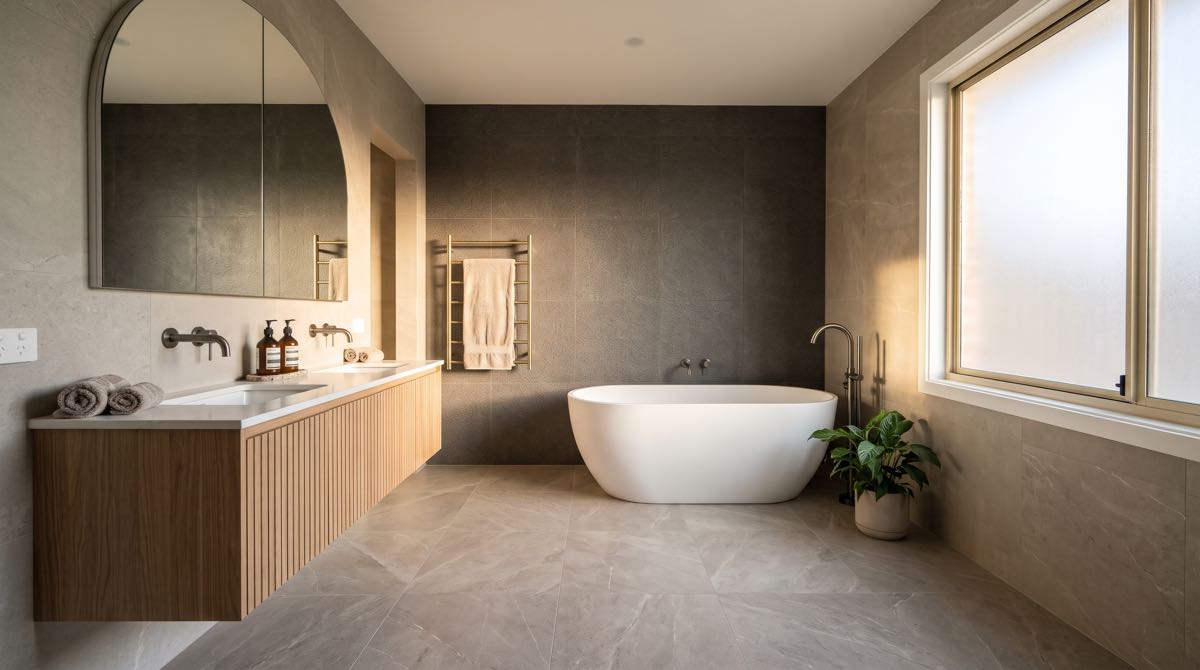
Walk into any bathroom showroom in Richmond or Brunswick right now and you'll hear the same question from almost every customer: “will this actually be warm in July?” That single question tells you more about where bathroom renovation Melbourne projects are headed in 2027 than any mood board ever could. Melbourne winters are brutal on cold tile, and after a few years of chasing matte black finishes and Insta-friendly freestanding tubs, homeowners are now spending their renovation dollars on things they'll actually feel every single morning.
We talk to a lot of Melbourne homeowners mid-renovation, and the pattern this year is pretty clear. People aren't necessarily spending more on their bathrooms. They're spending differently. Heated floors, better tapware finishes that hide water spots, and large-format tiles that cut down grout lines are eating into budgets that used to go on statement baths and oversized mirrors.
Heated floors have gone from luxury extra to a line item people actually budget for
Underfloor heating used to be the thing a renovator mentioned at the end of the quote, almost apologetically, knowing it would probably get cut. That's changed. According to Airtasker's 2026 cost data, bathrooms are the most expensive room to heat per square metre nationally, coming in at $133 to $250 per square metre, higher than living areas or bedrooms, because the tighter space means more precise cuts, extra waterproofing, and a dedicated thermostat. In Melbourne specifically, benchmark pricing sits lower, in the $40 to $60 per square metre range for standard retrofits, though that's before the expert bathroom tiling, waterproofing membrane and electrical work that typically rides alongside it.
Predictable Running Costs That Surprise Skeptics
Running costs are the part that actually sells it to sceptical homeowners. Heating a typical four-square-metre bathroom for a few hours each morning costs somewhere around $30 to $50 a month, depending on your tariff and how well insulated the room is underneath. For a lot of families, that's a smaller number than they expected, and it's enough to tip a “maybe” into a “yes” during the renovation quote stage.
Critical Timing Rule: Pre-Tiling Installation Only
Heated floors need to go in before the tiles, not after. Retrofitting one into an already-tiled bathroom means pulling the floor back up, which can roughly double the cost of the heating component on its own. If you're planning a renovation and even slightly curious about heated floors, raise it with your builder at the quoting stage, not after the tiler has finished.
Gunmetal is quietly pushing matte black off the shelf
Matte black had a good run, but it shows every water spot and fingerprint in a busy family bathroom, and Melbourne showrooms are reporting that buyers are moving toward gunmetal finishes instead. Gunmetal reads as charcoal in low light and shifts toward a subtle bronze or nickel tone depending on how the light hits it, which makes it more forgiving day to day. It's commonly paired with brushed brass or brushed nickel hardware rather than matched exactly, which gives a room a bit more depth than the all-one-finish look that dominated a few years ago.
What to Ask Your Builder About Tapware Quality
If you're comparing tapware on a renovation quote, ask specifically about PVD (Physical Vapour Deposition) coating quality and whether the tap body is solid brass or a cheaper composite. The finish on a budget tap can start pitting or discolouring within a couple of years in Melbourne's harder water suburbs, while a properly PVD-coated solid brass mixer will still look new after a decade of daily use.
Large tiles, smaller grout bill, bigger installation risk
Large-format tiles keep climbing in popularity because fewer grout lines mean less cleaning and a cleaner overall look, which matters in a climate where mould along grout lines is a constant low-level battle. The trade-off is that substrate preparation becomes far more critical. An uneven base that would hide under smaller tiles becomes obvious, and sometimes structurally risky, under a 900mm or 1200mm format tile.
This isn't a trend to chase with the cheapest tiler you can find; ask to see photos of a large-format job they've completed in the last year, not just a folio of smaller mosaic work. Proper screeding, floor levelling compounds, and expansion joints are non-negotiable under Victorian building codes (AS 3958.1).
Stone-look finishes—limestone, travertine and marble-effect porcelain—remain the most requested look to pair with large tiles, alongside textured and concrete-effect options for a slightly more industrial feel that suits Melbourne's warehouse-conversion apartments in areas like Collingwood and Fitzroy.
Period homes in Brunswick, Northcote and Hawthorn are driving their own version of this trend
Melbourne's huge stock of Victorian and Edwardian terraces means a lot of this renovation activity isn't happening in open, easy-to-build rooms. It's happening in bathrooms with low ceilings, no existing subfloor access, and plumbing that was never meant to carry a rainhead shower. In suburbs like Northcote, Brunswick and parts of Hawthorn, builders are routinely finding timber joists that need reinforcing before any heated floor or heavy stone tile can go in. This structural reality is part of why the same-looking renovation can cost noticeably more on one street than another a few kilometres away.
If you own a period property, we've broken down these specific structural and plumbing considerations in our detailed guide on walk-in shower costs in Melbourne period homes, as well as our practical ideas for terrace and weatherboard bathroom layouts. Get a trade through to check subfloor access and structural capacity before you fall in love with a 1200mm porcelain slab tile or a hydronic heated floor system—it's a cheap conversation that can save you from an expensive surprise once demolition starts.
What this means if you're planning a renovation in the next year
None of this means you need to chase every trend on this list. A standard ensuite renovation in Melbourne still typically lands between roughly $15,750 and $22,050, and a premium fit-out with the features above can run from around $22,050 up to $31,500 or more once heated floors, upgraded tapware and large-format stone-look tiles are all specified together. For wider regional numbers, review our comprehensive Melbourne suburb price guide and the breakdown of full bathroom renovation costs.
Our Honest Advice for 2027 Renovators
Pick one or two of these upgrades that actually matter to how you live, rather than all three, and put the rest of the budget into the boring stuff nobody notices: AS 3740 waterproofing compliance, adequate ventilation and a high-flow extraction fan. That's what stops you renovating the same bathroom again in five years.
Heated floors are the one upgrade we'd genuinely encourage most Melbourne households to at least price out, given how cheap it is to run and how miserable the alternative is on a cold tile floor in July. Everything else on this list is a style choice. That one is closer to a quality-of-life decision.
2027 Melbourne Bathroom Renovation Checklist
- Decide on heated floors upfront: Must be specified prior to screed and waterproofing, not added retrospectively.
- Specify PVD-coated gunmetal: Ensures scratch resistance and avoids water spotting common with matte black.
- Verify subfloor deflection: Crucial for large-format porcelain tiles, especially over Victorian or Edwardian timber joists.
- Protect the core envelope: Prioritise certified waterproofing and extraction ventilation over decorative items.
Bathroom Remodel Melbourne
Licensed Victorian Builders & Renovation Specialists with 15+ years of experience across metropolitan Melbourne.